
EOLO PERFIDO STUDIO
PROPAGANDA
THE SERIES
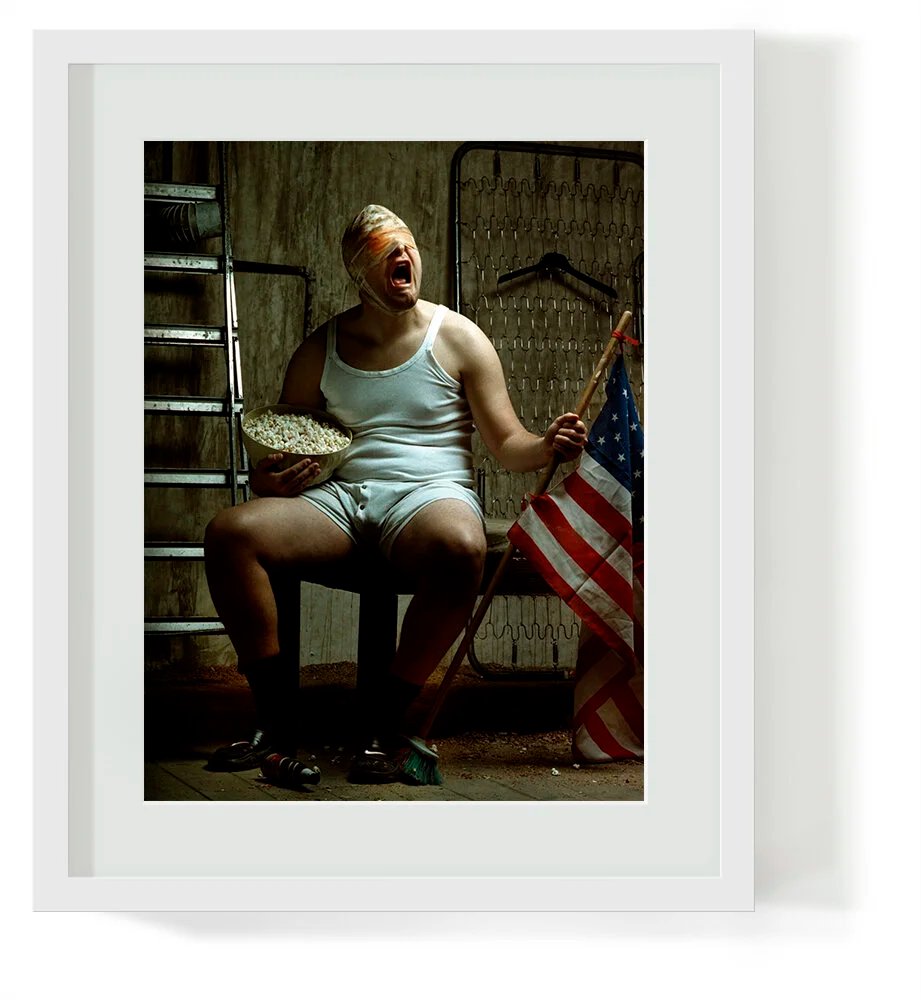
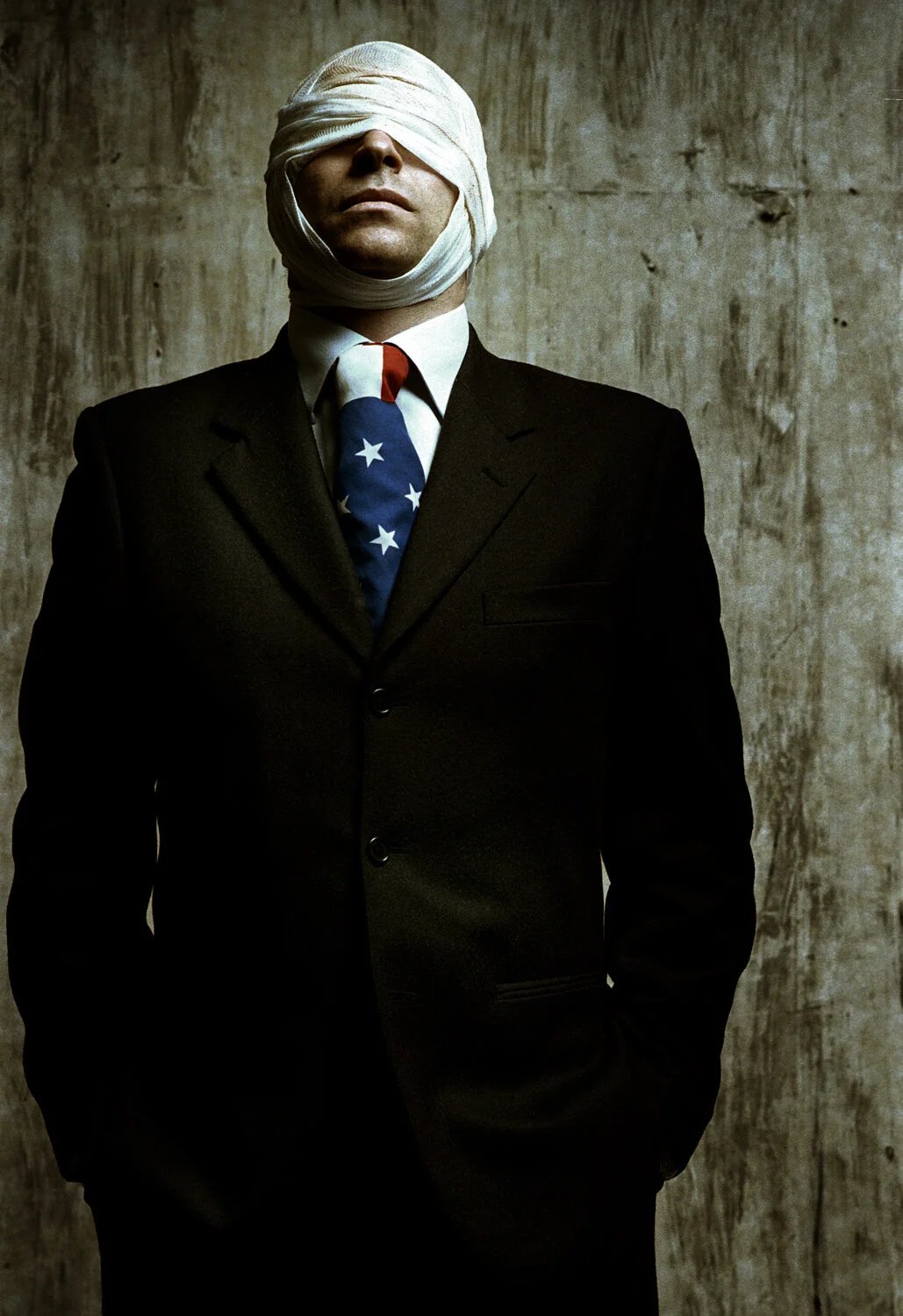
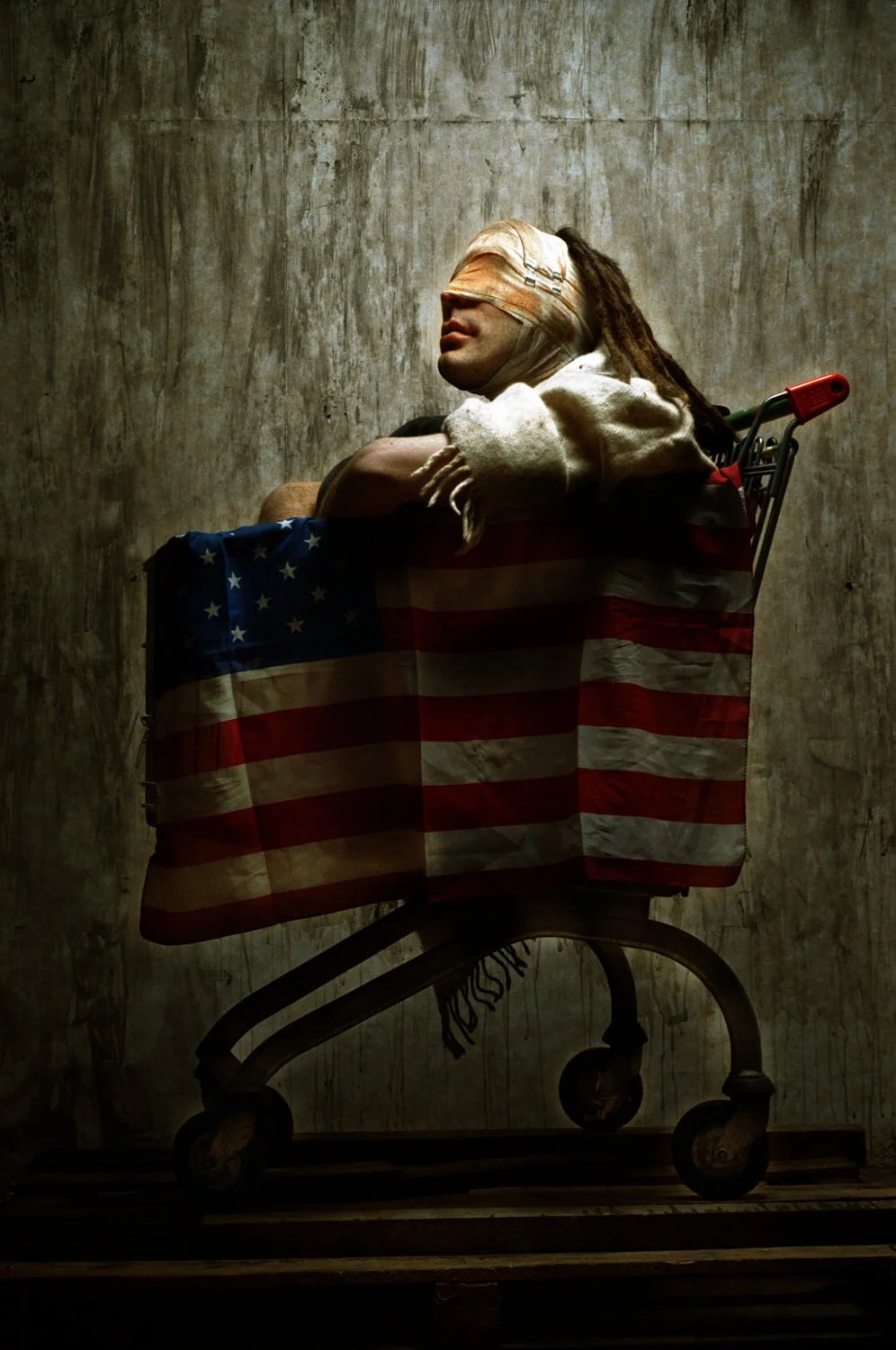
Propaganda, a fine art photographic series by Eolo Perfido (Cognac, France, 1972), combines unmistakable visual power with a predominant geopolitical theme, while offering multiple levels of interpretation. Faced with work like this, we often focus on its immediately recognisable features, or on the surface qualities of the photographs. Perfido is an accomplished professional photographer, capable of astonishing us through his command of technique alone. At first glance, one might imagine that anyone with a disciplined aesthetic approach and a practised understanding of visual communication could produce a series like Propaganda.
Yet this is not the case. A closer look at Perfido’s portfolio reveals a deeply considered approach and a refined, highly personal style throughout his work. To viewers born in Italy, and particularly in Rome, his visual language may seem “foreign”. Certainly, the architectural organisation of his images, even the most apparently spontaneous, reveals an elegance and sense of structure familiar to a Mediterranean viewer raised in the shadow of amphitheatres and cathedrals.
Yet the tamed violence, refined morbidity and outrageous beauty of his photographs are more familiar to Central European and Anglo-American audiences. It is no coincidence that the prestigious Dutch quarterly Eyemazing devoted a cover and portfolio to Propaganda a little over a year ago.
How, then, might we find our way into Perfido’s images? Photography enthusiasts may recognise affinities with the Felliniesque glamour of Erwin Olaf or the cruel theatricality of Joel-Peter Witkin, though without the former’s humour or the latter’s use of quotation. A broader audience may have encountered distant echoes of these atmospheres in provocative contemporary advertising, somewhere between LaChapelle’s artificial morbidity and von Unwerth’s neo-Berlin aesthetic. Viewers familiar with music videos may recognise a kinship with Floria Sigismondi’s neo-Gothic imagery for Marilyn Manson, Björk and the White Stripes, though without Cronenberg’s mutants.
A CRITICAL PERSPECTIVE
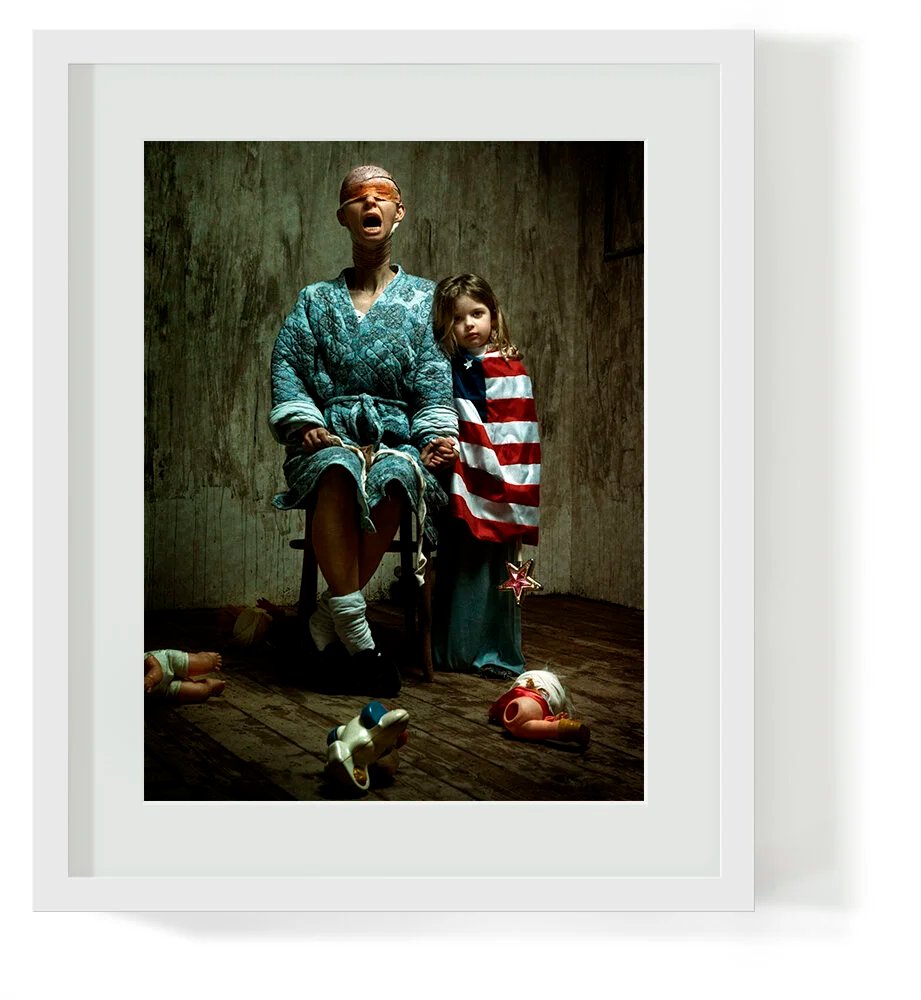
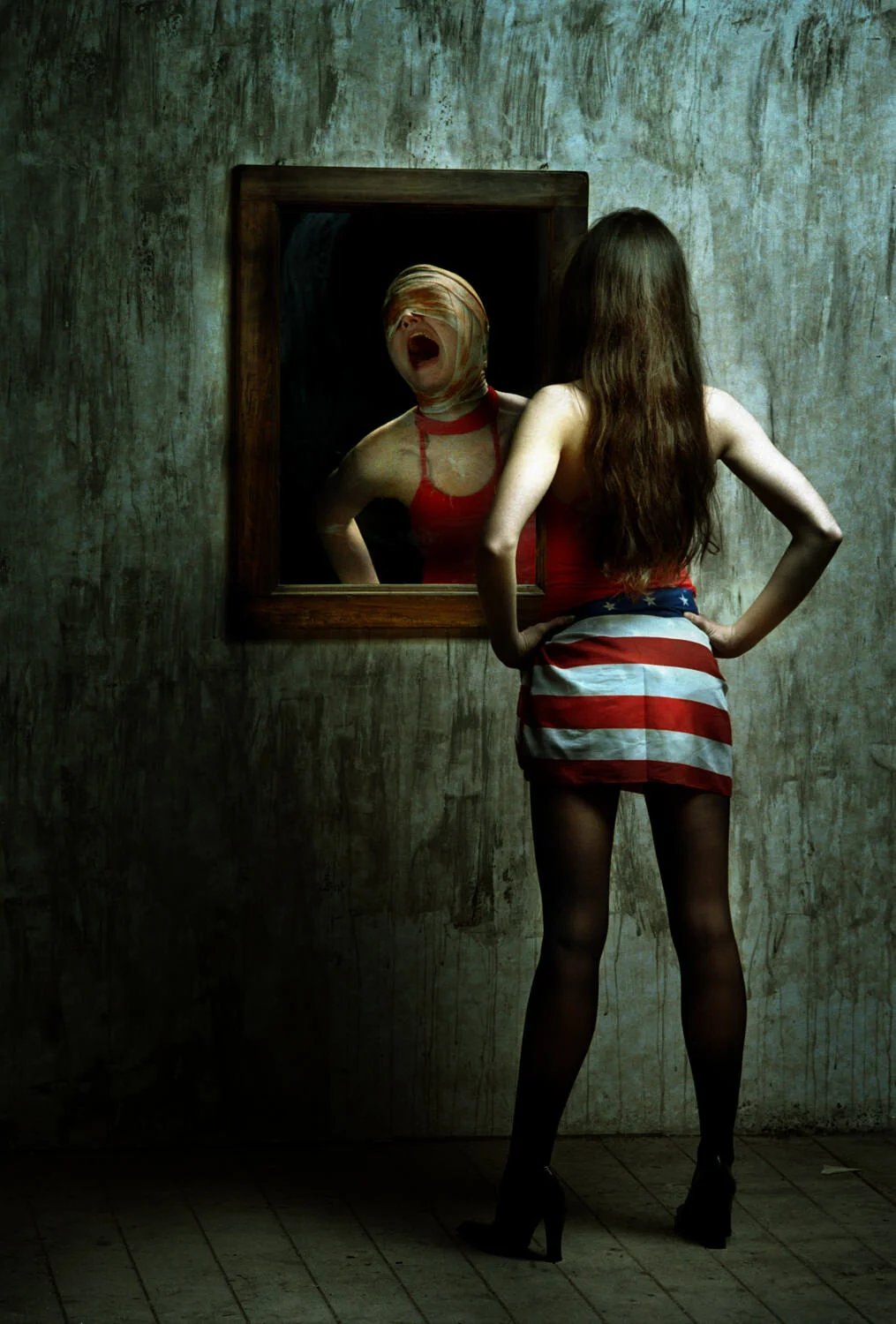
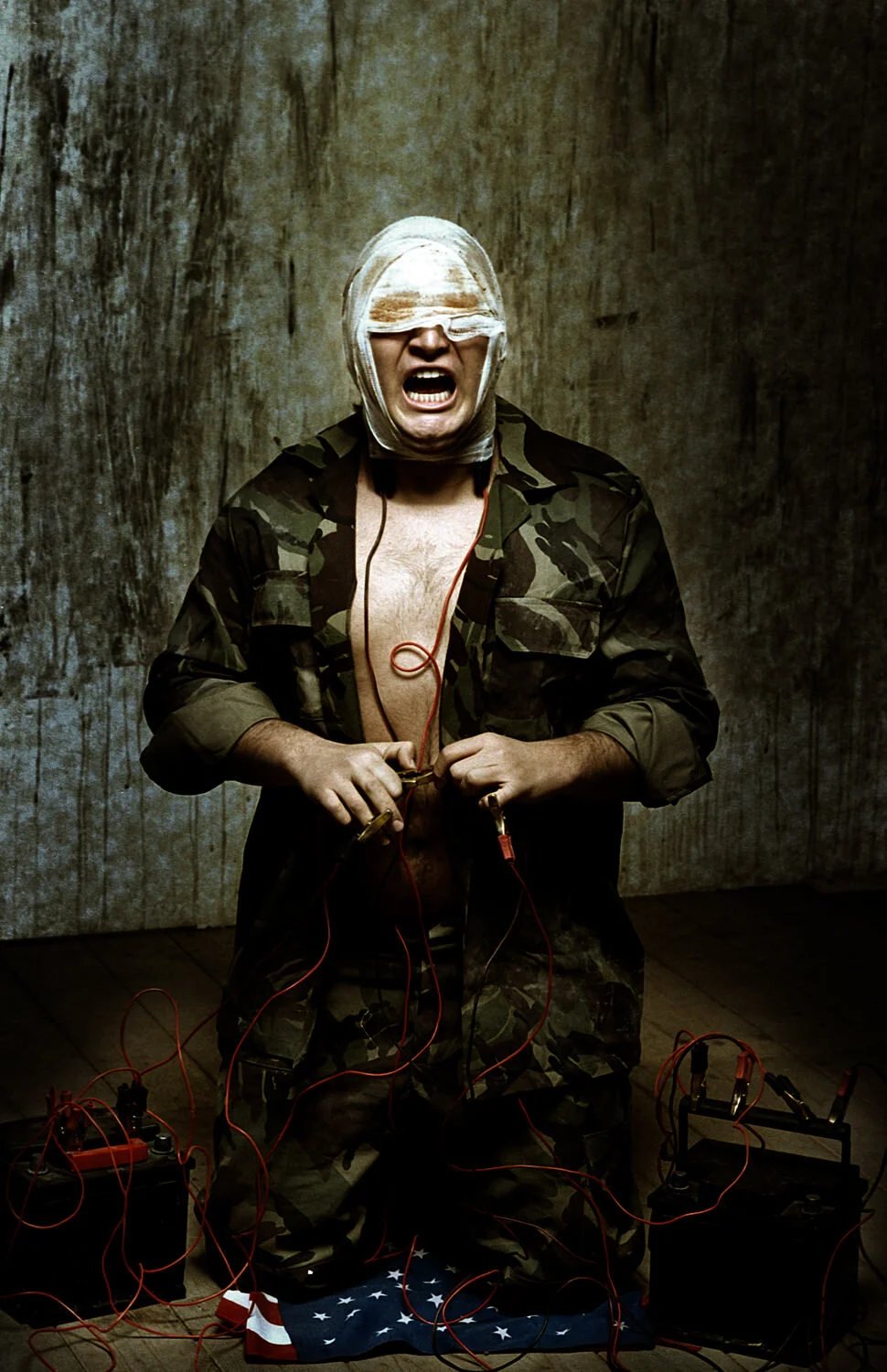
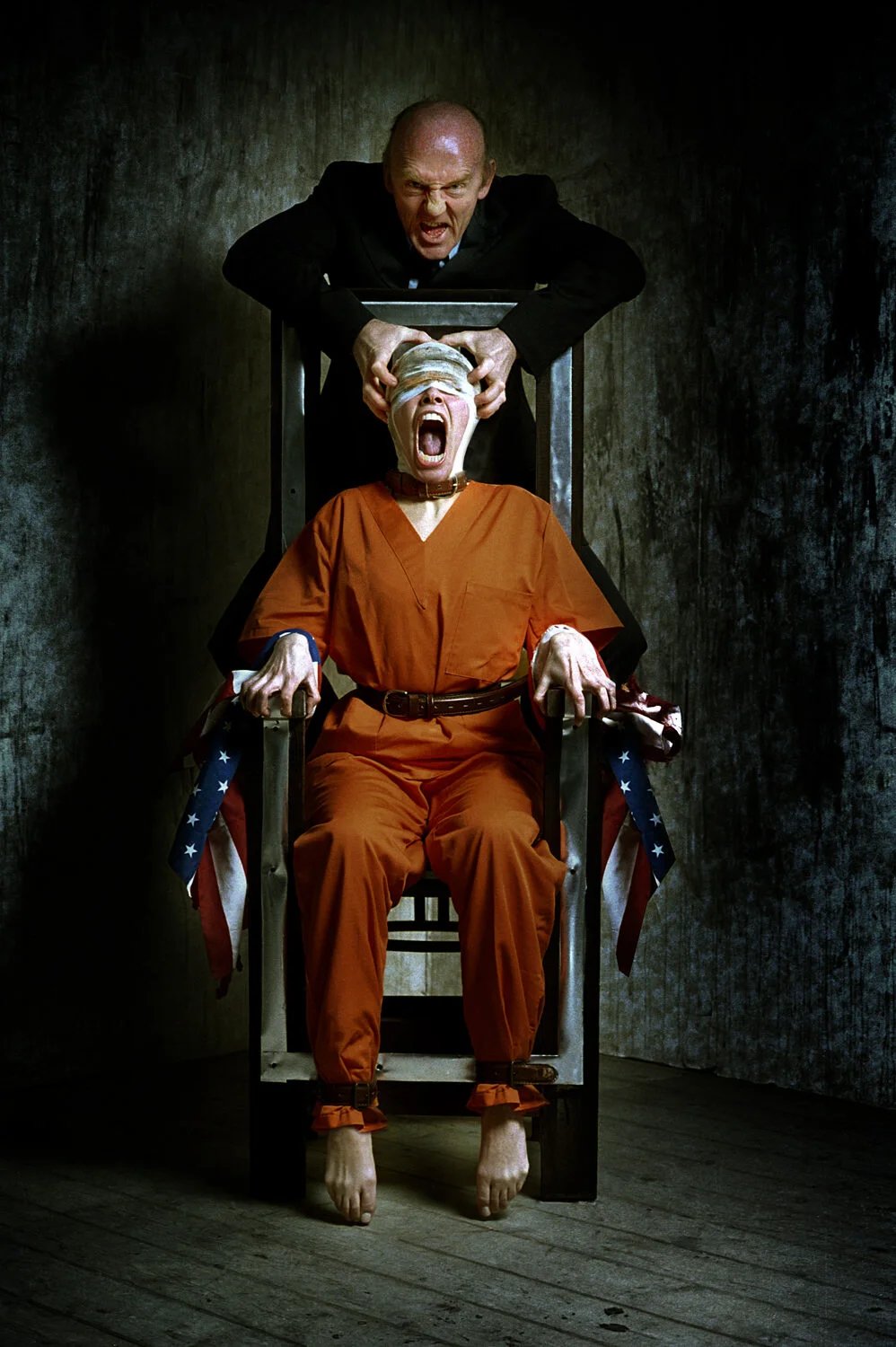
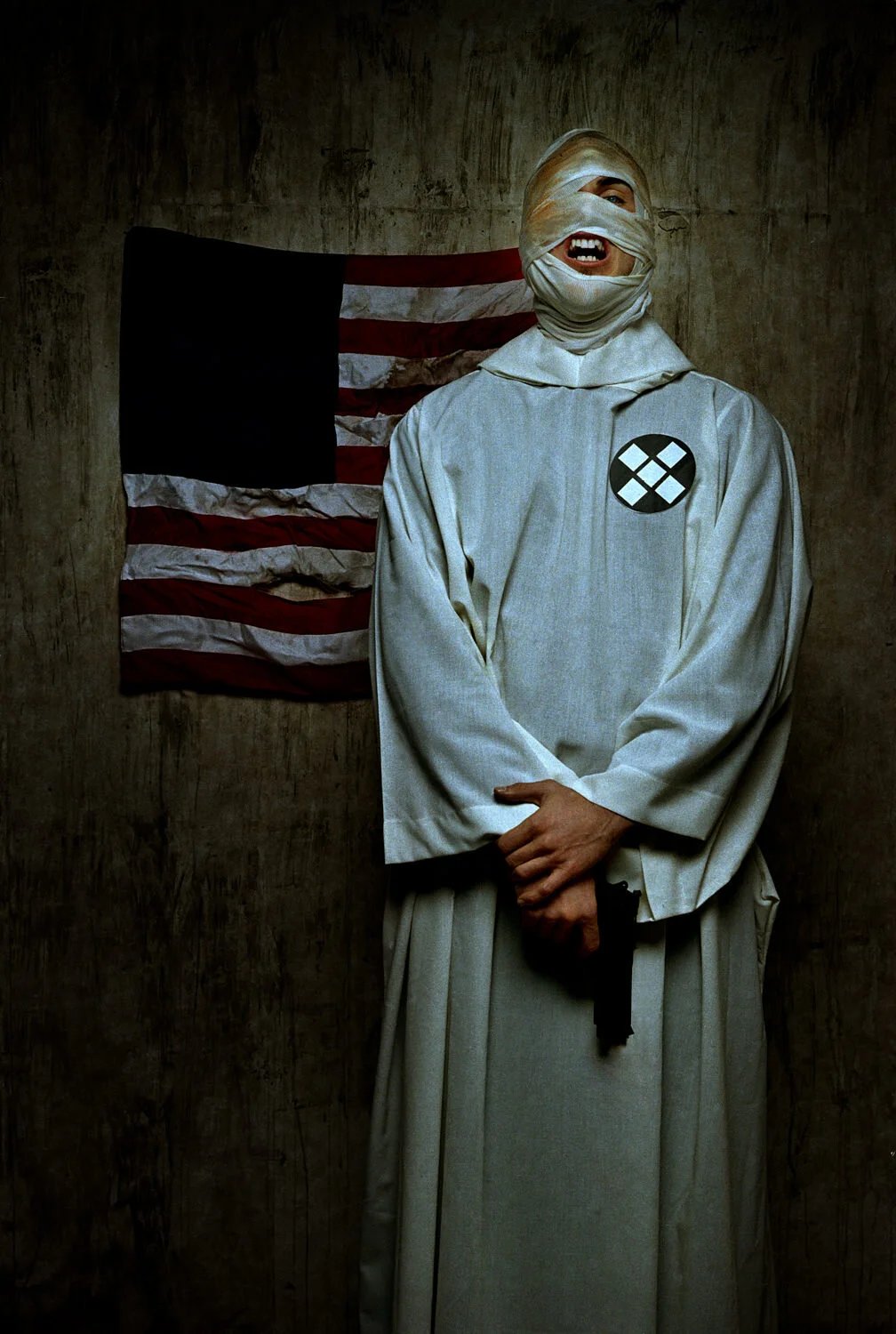
Despite the formal dexterity and directness of Eolo Perfido’s visual language, its appeal can extend across different fields. With its eyeless faces and mouths reduced to teeth and gaping throats emitting superhuman screams, Propaganda may speak to admirers of Francis Bacon’s paintings. Its obsessive use of bandages to cover the eyes, those privileged channels of art, may recall the prosthetic performances of Rudolf Schwarzkogler. Even a devoted follower of Michael Moore might find an irresistible connection between the blind scream and the ubiquitous Stars and Stripes.
We must also consider the cast of characters in this portfolio: a gallery of emblems of Americanness, seen through the reversed perspective of the “other”. When Denys Arcand explored the decline of the American Empire in 1986, he could hardly have imagined the implosion of American cultural dominance. Now, as the American Dream seems to have reached its REM phase and everyone appears eager to wake up, Perfido seizes the historical opportunity to reflect on America. His approach is symbolic rather than documentary. He creates a contemporary iconography, almost a tarot deck, whose figures embody the negative clichés now associated, hastily or ideologically, with the idea of America: the starlet, the condemned prisoner, the patriot, the congressman and the confessor.
This chamber of horrors becomes a carefully constructed form of propaganda, seeking to awaken us from a dream by confronting us with the nightmare of others. Within this dream within a dream, America’s outward identity can no longer remain haughty and aloof, like Bush senior in Avedon’s portrait. Instead, it must reflect an internal crisis: a political and moral crisis of self-representation. This crisis affects us too, as a province of the Empire and a province of dreams. Eolo Perfido gives it an artistic form that is itself both a gift and a vision of liberation. In this sense, Propaganda becomes a contemporary, iconic counterpart to the American anthem played by Jimi Hendrix at Woodstock in 1969: violated and made incandescent, obscene, necessary, absolute.
Augusto Pieroni, 2009
www.augustopieroni.net

THE PRINTS
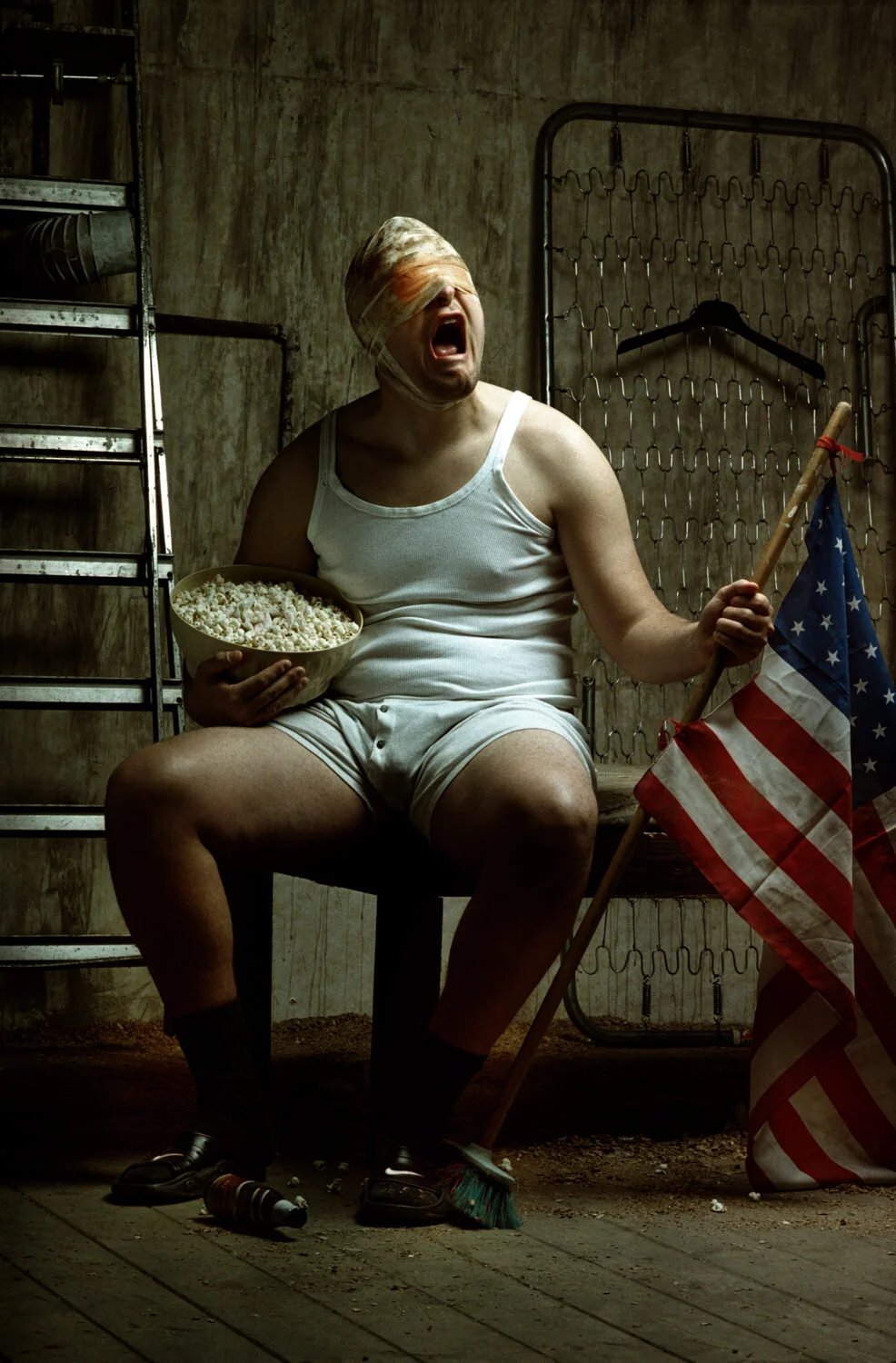
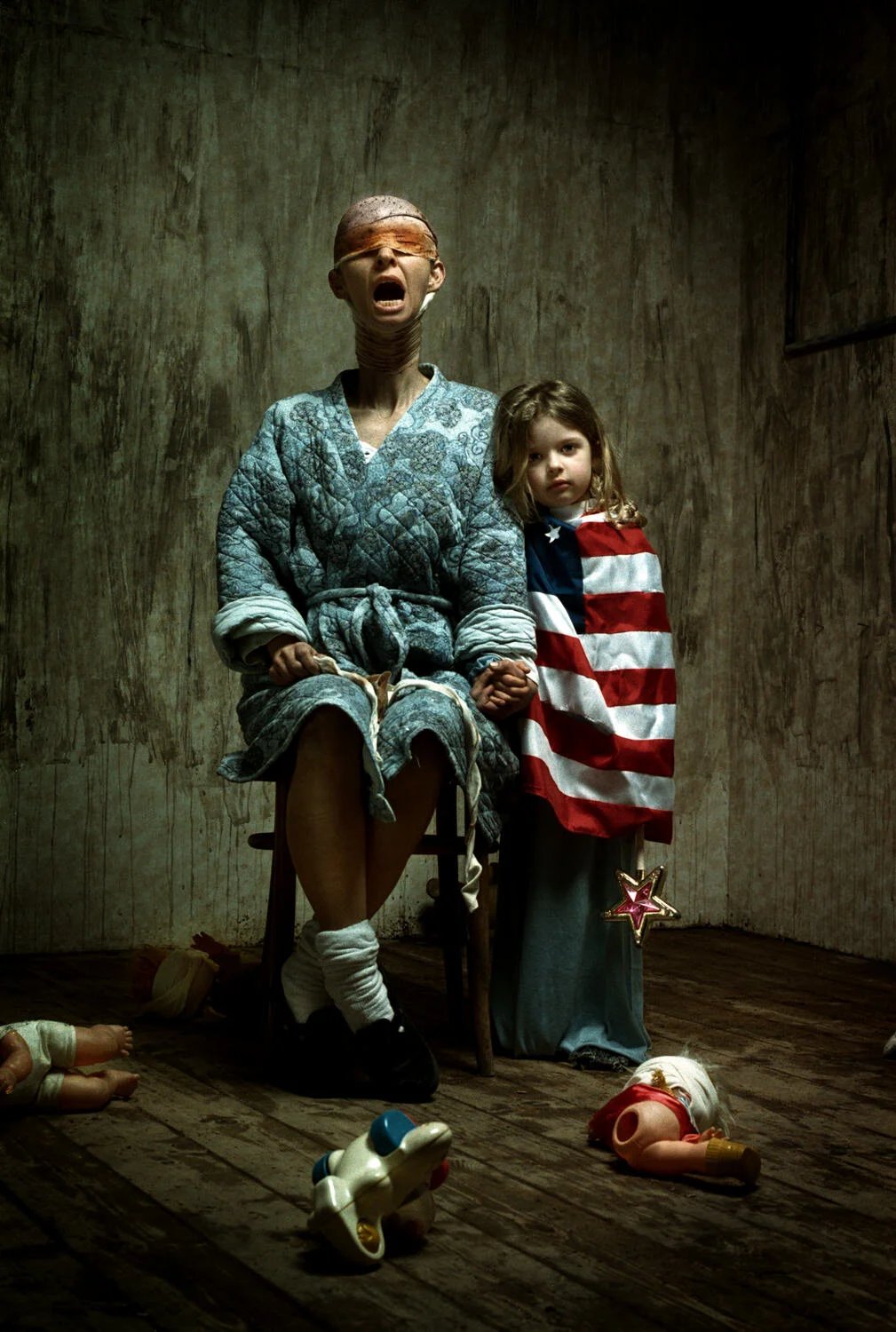
Printed on Hahnemühle FineArt® Baryta, 325 gsm paper, every print is signed, numbered and certified by the author. Three formats have been produced: 50 × 70 cm, 70 × 100 cm and 100 × 160 cm.
Our fine art prints are Custom Limited Editions printed on exhibition-grade fibre paper, numbered and signed on the verso by the author. Every print includes a signed certificate of authenticity that you will receive with your carefully packaged, gallery-quality print.
For availability, prices and support please write us at eoloperfidostudio@gmail.com or visit the contact page.